
Framing the Year Ahead
Written by Ann Ewing
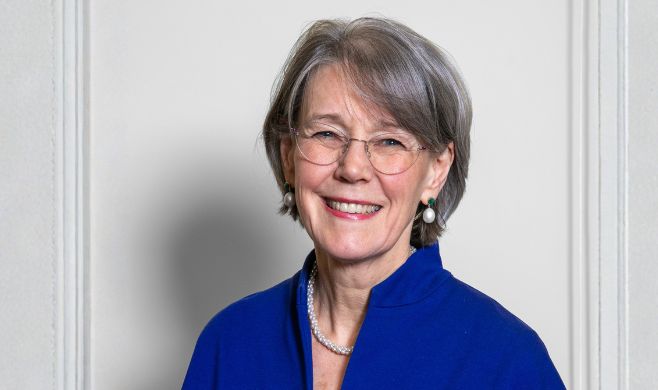
By Ann Ewing Independent Consultant and Windsor Leadership Facilitator.
Ann spent the first half of her career in the energy and financial services sectors, while the second half has focused on education - both in schools and universities - as well as a range of non-executive roles in charities. The connecting threads through all these roles have been the strategic importance of people, the impact of leadership development, and the value of creating a compelling reason to dedicate time, effort and energy to a cause.
Ann facilitates on a number of Windsor Leadership programmes, both online and in person - a role she describes as ‘life affirming’ which provides ‘an opportunity to work with inspirational participants from all walks of life.’
Framing the Year Ahead
As I try to frame my resolutions for the year - arguably a triumph of hope over experience, despite my new year optimism - I’m looking around for inspiration. And who could be more inspirational than the late John Adair?
John was synonymous with Leadership Development and was a founding father of Windsor Leadership as well as a Fellow for many years. As former Windsor Leadership CEO Jonathan Story said, John will be much missed by the Windsor Leadership community as well as the many organisations on which he had such a positive influence.
Amongst the wonderful obituaries, I loved the reference to ‘his quiet voice and listening ear’. His three circles model - so deceptively simple - is such a powerful way to think about the need for leaders to balance the dimensions of individual, task, and team. Depicted as three intersecting circles, it suggests that action in one area will affect the others.
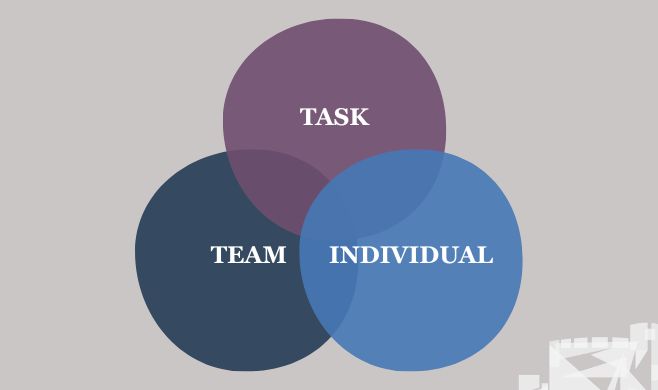
I find that notion of supporting the individual, achieving the task, and developing the team, really helpful in creating perspective in a busy world. Too much focus on one at the expense of the others won’t deliver the optimum result. Changing dynamics may mean that a leader has to shift priorities, prioritising different aspects at different times. Just taking a bit of time to stand back and assess present needs can be incredibly useful. More focus on the team, for instance, and slightly less on the individual and task for a while might pay longer term dividends.
Obituarists also referred to Adair’s three ‘signposts’: understanding what you are (the qualities of the leader); what you know (the knowledge and expertise required); and what you do (the functional actions and behaviours a leader takes).
The three signposts model will be familiar to many Windsor alumni. Particularly at inflection points, when big choices are needed, I’ve found them a good way to test options – do I understand what I am; what I know; and what I do?
For me, they almost always help to diagnose why something isn’t currently working. Or more positively, why this route is the right one compared with others. Again, a personal view, but ‘what you are’ feels the most fundamental question from which the others flow.
Exploring the Fundamentals
John’s questions seem enduring - despite huge societal change, generational differences, technological advancements, and the apparently unstoppable rise of AI. In a world where so many certainties have been brushed away, going back to the fundamentals of what we are (so far), what we know (so far), and what we do (so far) feels healthy and helpful.
I now enjoy a portfolio career embracing those things that give me joy and satisfaction, mostly in the world of education. I have the privilege of working with some remarkable chairs of boards and have been wondering if the three ‘signposts’ model can help us to understand what it takes to lead well in the specific context of non-executive roles. The non-executive/executive relationship is complex: there needs to be mutual respect of boundaries and a shared belief that all parties are acting in the best interests of the organisation. The non-executives are not there – contrary to the unhelpful stereotype – to tick a box, or to pose questions designed to trap rather than enlighten. To fulfil the fiduciary and legal requirements is a necessary but, on its own, rather a dry and not very satisfying interpretation of the role.
The most successful chairs I have seen are deeply vested in the success of the organisation and, in particular, its CEO. They help the CEO to be the best version of themselves. They think hard about the role of the board and its constituent parts. They take time to understand who their trustee colleagues are and how they can best contribute. Most trustees are volunteers: the chair’s leadership skill in ensuring every voice is heard, expertise is tapped, and that the sum is greater than the proverbial parts, is vital.
Resolutions
So taking this all on board, my first resolution this year is to consistently learn from the leadership skills of chairs I work with, using John’s individual, task, team vector as a framework. My second is to think about where I want to go in 2026 as well as how I got here. My third is to try to have ‘a quiet voice and a listening ear’. And my fourth is to keep resolutions to a strictly limited number to maximise the chance of success!
For further reflection
It wouldn’t be Windsor without suggesting some questions for readers to ponder if they wish. Here goes:
- Could the 3-circle model of balancing the dimensions of individual, task, and team be helpful to you, in an important piece of work that you’re leading?
- Have you located Adair’s 3 signposts for yourself at the place you currently find yourself? Understanding who you are; what you know; and what you do.
- If something is lurking at the back of your mind, and you’ve got into the habit of generating displacement activities to avoid addressing it, is there something in the framework that could help? Could you identify a small number of significant actions that would make a big difference?
Disclaimer:
The views expressed in Blogs, Articles, Podcasts and Videos posted on Windsor Leadership’s website and social media channels, remain the opinions of the individuals and do not necessarily represent the views or opinions of Windsor Leadership. Windsor Leadership does not accept any responsibility for the accuracy of the information shared. We hope however that the views prove to be useful in reflecting on the challenges of leading today.
Latest blogs
Prioritising Wellbeing: Leading by Example
Jane explores why leading by example matters when it comes to wellbeing.
Leading through complexity: what the Inner Development Goals offer
Ed explores how development goals can help leaders navigate complexity, uncertainty and change.

My stumble: Why doing the important things matters
When life gets busiest, the things that help us most are often the first to fall away. Jo Youle reflects on leadership, learning and making time for what matters.
Disclaimer:
The views expressed in Blogs, Articles, Podcasts and Videos posted on Windsor Leadership’s website and social media channels, remain the opinions of the individuals and do not necessarily represent the views or opinions of Windsor Leadership. Windsor Leadership does not accept any responsibility for the accuracy of the information shared. We hope however that the views prove to be useful in reflecting on the challenges of leading today.