
Connection is not a nice-to-have. It is a leadership requirement.
By Sam Kinsey-Briggs
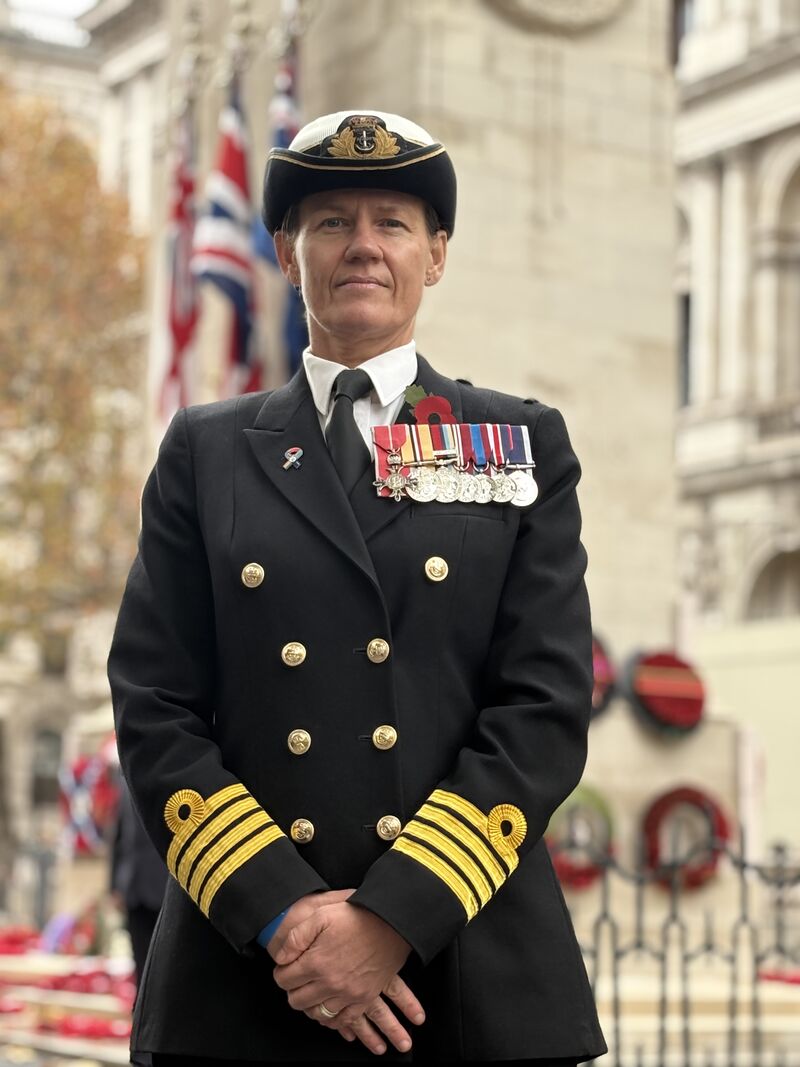
By Sam Kinsey-Briggs MBE MA, Windsor Leadership Trust alumna and founder of ACSIS Life Coaching Ltd
Among the trees
Recently, our Windsor Leadership cohort gathered for our biannual weekend. We spent a day at Bewl Water in Kent: 21 kilometres, moving through the landscape in pairs and small groups before coming together over lunch at a pub halfway round.
Before we set off, we listened to a voice message from Andrea, the coach from our original programme. She read us Mary Oliver's When I am among the trees. That set the tone.We talked about our challenges. We laughed a lot. We connected with the landscape around us and with each other in ways that a meeting room rarely allows, when we were among the trees.
It reminded me how rare this kind of connection can be. And how easily we underestimate its importance in leadership.
What service taught me
For much of my career, across nearly three decades in the British Army and Royal Navy, leadership was spoken about in the language of responsibility, standards, courage and delivery. All of those things matter. But the longer I have led people, the more convinced I have become that connection sits underneath all of it. It is not a softer extra. It is one of the conditions that makes the real work possible. The military understands connection in ways that are sometimes difficult to explain from the outside. It is the feeling of being known, needed and trusted. And it is rarely built through grand gestures.
I was on operations in Baghdad, living in the Green Zone during a period of sustained rocket attacks. A colleague turned up every day with professionalism and a smile, but I could see something shifting beneath the surface. One day, in a quiet moment, I made them a brew, sat with them and simply asked: Hey Shippers. Here's a cuppa. How are you?
That was enough. They told me their fears. I shared mine. We were different ranks, different trades, different backgrounds entirely. A simple act of care in a quiet moment cut through all of that.
Shelley Taylor's research at UCLA describes this as the "tend-and-befriend" response: the instinct, especially under pressure, to reach toward connection rather than away from it. It is not weakness. It is one of our most effective human strategies.
Trust is built in small moments
Connection in leadership is often constructed in exchanges like that one, not in formal programmes or team-building events. It is built when someone feels safe enough to say, I think we have missed something, or I am struggling, and is met with humanity, not humiliation.
We often hear leaders say, "My door is always open." It is usually said with good intent. But an open door is not the same as an open conversation. Do you stay behind your desk, or do you move your chair? Do you offer a brew? These small signals tell people whether you want the truth or simply want reassurance.
I have also seen what happens when psychological safety is absent. A leader I served under would not delegate, communicated only upward, and controlled who had access to which conversations. The team still delivered, because professional people do. But the ideas stayed in their heads. The concerns went unspoken. The leader was surrounded by people and, in effect, working alone. We could have done so much more had the team been trusted, empowered and encouraged to make mistakes in a safe environment.
Harvard Business School professor Amy Edmondson's decades of research confirm what that experience showed me: psychological safety does not lower standards. It is the condition that allows difficult conversations to happen early enough to be useful. Nobody ever got on a bike and just rode it. We fall off. That is how we find our balance.
A moment that recalibrated me
On a nine-month deployment on Atlantic Patrol Task (South), we sailed via the Caribbean, conducted anti-narcotics operations, and eventually reached the Falkland Islands and the Antarctic. Being at sea for that length of time meant leaving family and familiar connection behind. We built something new as a ship's company, our own particular bond and connection.
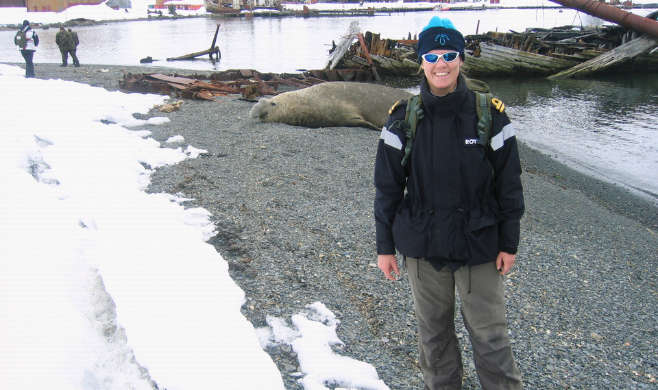
But nothing prepared me for being stranded overnight in South Georgia, weather-bound with the scientists stationed at Grytviken. The next morning, over a bacon sandwich, I watched elephant seals giving birth on the research station doorstep. Earlier, we had seen a pod of killer whales and their calves moving alongside the ship in the Antarctic waters. Something shifted in me in those moments.
Psychologist Dacher Keltner's research on awe describes it precisely: encounters with something vast temporarily dissolves self-focused thinking and restores perspective. The noise of the deployment quietened. I came back from that morning different from how I had arrived.
Leaders need to make room for moments like these. Not every team is going to the Antarctic. But the principle holds. Sometimes the most productive thing you can do is step away from the noise long enough for your thinking to recalibrate. Nature can unlock that in ways we consistently underestimate.
Connection starts within
Whilst tough decisions and moments of solitude are inevitably a part of leadership, connection to self, colleagues, community and environment will always play a large part in my leadership model and journey.
The longer I have led, the more I believe that connection to others depends first on connection to self. If you do not understand your own values, limits and habits, they will still show up in your leadership…..only unmanaged.
I experienced this directly when building my own business. There was a period when my mind was racing and my clarity had gone. What steadied me was the psychological safety I had built with my own team. I was able to say I was struggling, without dressing it up, and was met with honesty, softness and genuine feedback.
That moment reminded me why I believe in all of this so completely.
Connection to others creates trust. Connection to self creates authenticity. Connection to community creates meaning. Connection to the natural world restores perspective. These are not separate concerns. They reinforce each other. Together, they shape how we lead.
The leaders people remember are rarely the ones who sounded the cleverest in the room. They are the ones who made people feel trusted, capable and safe enough to grow. I remember those that inspired me and gave me the opportunity to make mistakes and learn and grow.
Connection is not a nice-to-have. It is a leadership requirement.
Reflections for you
Who in your team or organisation do you genuinely know — not their performance data, but what they are carrying?
When did you last create a quiet moment for a real conversation, rather than waiting for one to happen?
Where in your leadership might you be calling something one thing when it is quietly another — standards instead of control, pace instead of avoidance?
When did you last step away from the noise long enough to let your thinking recalibrate?
Who are the people in your life who help you find clarity when everything feels loud?
Sam Kinsey-Briggs MBE MA is a Windsor Leadership Trust alumna, British military veteran of nearly three decades and co-founder of ACSIS Life Coaching Ltd alongside fellow Windsor Alum Lloyd Allen. Now in her own transition from service, she works with leaders navigating change: from uniform, from burnout, from one version of themselves to the next; helping them find clarity, courage and connection.
Latest blogs

Prioritising Wellbeing: Leading by Example
Jane explores why leading by example matters when it comes to wellbeing.

Leading through complexity: what the Inner Development Goals offer
Ed explores how development goals can help leaders navigate complexity, uncertainty and change.

My stumble: Why doing the important things matters
When life gets busiest, the things that help us most are often the first to fall away. Jo Youle reflects on leadership, learning and making time for what matters.
Disclaimer:
The views expressed in Blogs, Articles, Podcasts and Videos posted on Windsor Leadership’s website and social media channels, remain the opinions of the individuals and do not necessarily represent the views or opinions of Windsor Leadership. Windsor Leadership does not accept any responsibility for the accuracy of the information shared. We hope however that the views prove to be useful in reflecting on the challenges of leading today.